NewsPublished 2026-11-24 · Event 2026-11-24 · The editorial team
Sundsvall's ruling parties want set rules for data centres and other power-hungry firms
The Social Democrats, the Left Party and the Centre Party, which govern Sundsvall, want the municipality to draw up a framework for what data centres and other power-intensive establishments should give back locally. The proposal goes back to the municipal executive board for a decision. What the municipality can legally demand, especially on private land, has yet to be mapped.
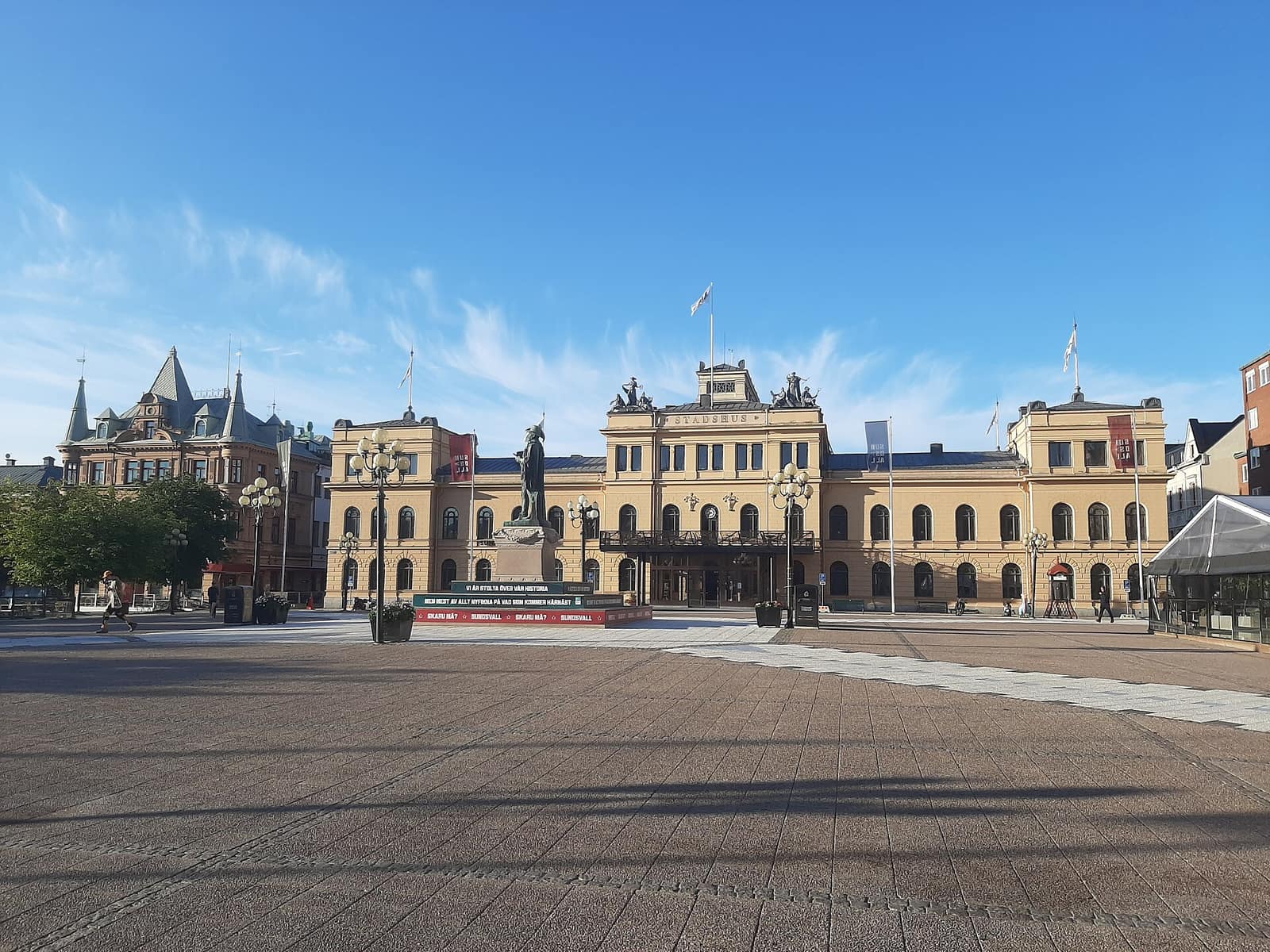

The governing coalition in Sundsvall, the Social Democrats, the Left Party and the Centre Party, wants tougher requirements on power-intensive companies that establish themselves in the municipality. In a press release sent to the editorial team on 24 November, the coalition writes that the municipality should draw up a framework for energy-intensive establishments, so that the investments also create long-term value for the municipality and its residents. Data centres are the first example it names.
What is new is the shift from case-by-case deals to rules set in advance. “We want to go from individual negotiations to clear rules of the game,” says the chair of the municipal executive board (S). Under the proposal, the municipal executive office, together with the departments and municipal companies concerned, is tasked with drawing up a framework with priorities for retaining local value. The proposal is then to return to the municipal executive board for a decision. The press release gives no date, and no framework has been adopted.
The coalition writes that AI has created a market where companies demand large amounts of electricity and land, and that such establishments often create fewer direct jobs relative to their power use than traditional manufacturing. The press release gives no figures for this.
The framework is to apply to domestic and international companies alike. The municipality is also to map what legal means it has to set requirements. According to the press release, there is more room to negotiate terms when the municipality owns the land; on private land, the municipality has to work through early dialogue and voluntary agreements. Both cases already exist in Sundsvall. Torsboda Industrial Park AB was jointly owned by Sundsvall and Timrå, and when the council approved its sale to a Google company it also issued, according to Sundsvall municipality, assignments and political guidance on matters including energy, waste heat, transparency and public benefit. The Almåsen detailed plan at Töva, which the council is expected to decide on 30 November, covers land the municipality does not own, according to SVT.
The coalition says Sundsvall and Timrå have already worked on local benefit around Torsboda, including business opportunities for local companies, research, innovation and the possibility of using waste heat, and that the framework builds on that work. “We should not have to start from scratch every time a new data centre or other energy-intensive industry wants to establish itself,” says the chair of the municipal executive board (S).
The coalition also wants to talk to neighbouring municipalities about common approaches. “Municipalities should not have to compete with each other over who sets the lowest requirements,” says the chair. Above all, he calls for national rules that guarantee municipalities a share of the value from large power-intensive establishments. The Moderates also called for national responsibility and coordination on data centres, in a note to the minutes when the executive board handled the Almåsen plan on 16 November.
Why it matters
The Sundsvall area has data-centre projects at several stages: Google's Torsboda in neighbouring Timrå and Verda's planned AI centre at Almåsen. A framework would for the first time make the municipality's expectations known before a company arrives, instead of negotiating them project by project. How far it reaches depends on the legal mapping, because a municipality has few tools when the land is private. That is the same limit the chair of Hylte's executive board pointed to this month, when he told SVT that the municipality has no control over an establishment on private land.
Background
Sundsvall and Timrå jointly owned Torsboda Industrial Park AB. On 17 August 2026 both councils approved the sale of the company to DSC International AB in the Google group, on condition that the repurchase terms are renegotiated; Timrå's decision has been appealed. In February 2026 Sundsvall municipality announced that the Finnish company Verda Cloud Oy is establishing an AI centre outside central Sundsvall. The Almåsen detailed plan at Töva, about 42 hectares aimed at power-intensive use, goes to the council on 30 November. The press release was sent to the editorial team by the coalition; we have not found it published elsewhere and reproduce it as a source document.
Questions that remain
- When will the executive board take up the proposal? The press release says it returns for a decision but gives no date.
- Will the framework apply to projects already under way, such as Almåsen? The council is expected to adopt the detailed plan on 30 November, while the press release speaks of future establishments.
- What can the municipality require on private land? That is to be mapped, and for now the coalition points to early dialogue and voluntary agreements.
- What will retaining local value mean in practice? The press release names examples from Torsboda, such as local business, research and waste heat, but no requirements for the framework.
- Which neighbouring municipalities will take part in the dialogue? Timrå has worked on Torsboda with Sundsvall, but the press release names no municipalities.
What remains unknown
When the executive board will take up the proposal, which requirements the framework will contain, whether it will apply to projects already under way such as Almåsen, which neighbouring municipalities are part of the dialogue and what the legal mapping will conclude are not stated.
How the project has developed
- 2026-11-24Sundsvall's ruling parties propose a framework for energy-intensive establishments, building on the Torsboda work
- 2026-08-17Sundsvall and Timrå councils approve sale of Torsboda Industrial Park to Google company
Sources
- Sundsvallsstyret (S, V, C) — press release on a framework for energy-intensive establishments, sent to DataCenterSweden 24 November 2026 (reproduced; names removed) — Sundsvallsstyret (Socialdemokraterna, Vänsterpartiet och Centerpartiet i Sundsvall), 2026-11-24. Checked 2026-11-24.
- Sundsvall municipality explains: Major data centre investment in Torsboda and what it means for Sundsvall — Sundsvalls kommun, 2026-06-18. Checked 2026-11-11.
- Sundsvall Municipality — municipal executive committee minutes 16 November 2026 (§§ 244–247, 252–272; § 255 Almåsen detailed plan, KS-2026-01047) — Sundsvalls kommun, 2026-11-19. Checked 2026-11-19.
- Urban planning committee says yes to industrial land in Töva — SVT Nyheter Västernorrland, 2026-10-22. Checked 2026-10-23.
- Sundsvall becomes a hub for Europe's next major AI investment — Sundsvalls kommun, 2026-02-05. Checked 2026-10-23.
- SVT Halland — “MP-kritik mot beslut om datacenter i Hylte: ’Hur ska vi säkra elen?’” (24 November 2026) — SVT Nyheter, 2026-11-24. Checked 2026-11-24.