Editorial review 2026-09-12 · Jurisdiction: Sweden — temporary building permits as Boverket explains them
A temporary lov is not a permanent hall — PBL 9:71 is a limited-time door
Is a Swedish hall already a lasting building because someone said “we have a temporary permit”, or because a dated Plan and Building Act chapter 9 file has actually tested a limited-time measure? Boverket’s temporary-permit page, published 1 July 2014, last changed 1 July 2026 and used here, says a tidsbegränsat bygglov is a building permit for a measure that is to exist for a limited time. The page names three types: one that covers every lov-duty measure, one that covers only new construction for housing, and one that covers only a prison or a remand prison. Planning and Building Act (2010:900) chapter 9 section 39, as worded by Act (2025:974), says the person who intends a lov-duty measure that is only to last a limited time may apply for a temporary permit. Section 70 says the committee shall give one if the applicant asks and the measure has support in a detaljplan provision on temporary use of a building or land. Section 71 says the committee may give one if the applicant asks, the site can be restored, and either the measure is new housing construction or an associated measure that meets one of the conditions in sections 56–66, or the measure is intended to last a limited time and meets some but not all of those conditions. Section 72 says a temporary permit may be given for at most ten years, may be extended by at most five years at a time on the applicant’s request, and that the combined time may exceed fifteen years only where section 71 point 2 applies and the permit will be used for a seasonal purpose under section 40. Section 72 a, which ceases to apply on 1 July 2036 through Act (2026:505), lets a prison or remand-prison file reach twenty years. Section 73 says the site or the building shall be restored before the time runs out, that lov, rivningslov, marklov and anmälan do not apply to that restoration, and that restoration is not needed if a non-temporary permit has been given. Boverket is explicit that the committee may not decide a temporary permit on a permanent application, and may not on its own initiative rewrite the application. Those are statute and agency sentences. They are not a reserved megawatt and not a Meta Luleå, Microsoft Gävle–Sandviken–Staffanstorp, Google Horndal, EcoDataCenter Falun or atNorth SWE04 hall year. The building-permits hub already owns a lasting lov. The startbesked page already owns the start gate. The sanction-fee page already owns the later fee if restoration is missed. This page only asks which published temporary-permit object the hall file is sitting on. This is orientation, not counsel.
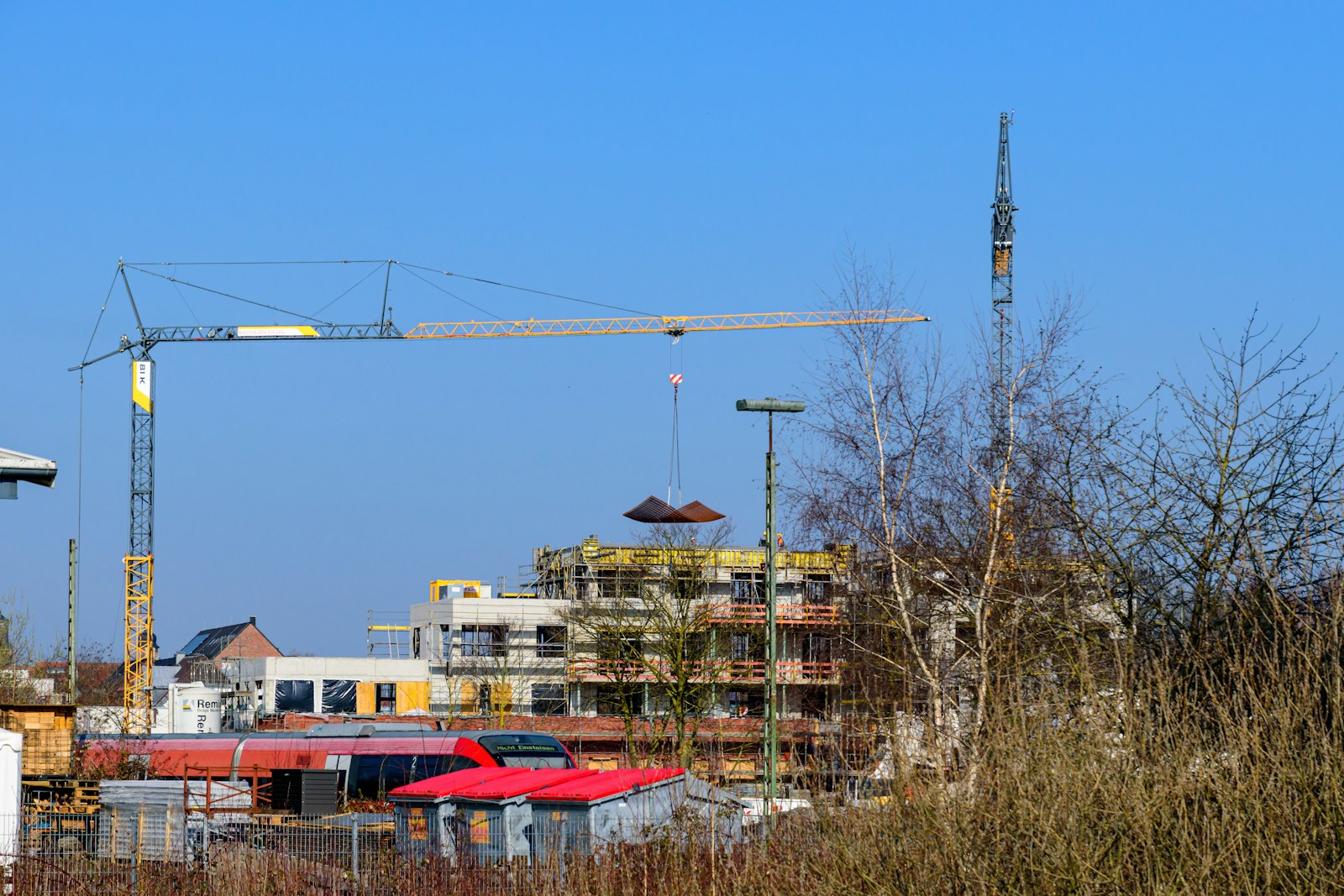
General orientation. Assess the specific project separately. Applies to: Readers placing a temporary-permit, construction-camp or ten-year-hall sentence on a Swedish building file.
Reading order
Name the type before you name the year. Boverket’s 1 July 2026 page splits the object into a general temporary lov, a housing-only new-build door and a prison or remand-prison door. A slide that says “temporary permit” has not yet shown which door.
Then keep the shall-door and the may-door on separate rows. Section 70 is a duty where a detaljplan already writes temporary use. Section 71 is a discretion that needs an applicant request, a restorable site and the “some but not all” test against sections 56–66. Do not treat a construction-camp sketch as already that test.
Then keep the ten-plus-five clock, seasonal overflow and restoration on later rows. Section 72 is ten years, five-year extensions and a fifteen-year combined cap except a section 40 seasonal use. Section 73 is a restoration duty before expiry. Boverket’s restoration page says a missed restoration becomes an unlawful measure and a sanction-fee file.
Then keep named project rows as geography. Microsoft, Falun, Horndal, SWE04 Sollefteå and evroc Arlandastad stay operator papers. This register does not publish a section 71 decision for those cadastral units.
- Three types — general, housing new-build, prison — are different doors.
- Section 70 is a shall; section 71 is a may.
- Ten plus five is not a fifteen-year hall guarantee.
- Restoration is its own desk, with a later sanction if missed.
What the temporary door, the clock and the restoration actually measure
The application measures a request for a temporary object. Boverket’s examination page says the committee may not decide a temporary permit on a permanent application and may not rewrite the application on its own. The applicant must show a limited-time character. Case law cited on that page reads that character as a temporary nature. This page will not reprint those court names as hall case law.
The “some but not all” test measures a gap against the lasting-lov conditions in sections 56–66. A measure that already meets every lasting condition is the wrong object for section 71 point 2. Boverket’s hub page says a temporary permit should as a rule not be used to avoid a plan change where the measure is permanent in character, and should not be given if the land is needed for the plan’s intended use.
The clock measures first grant and later extension as separate decisions. A first grant is at most ten years. An extension is at most five years and must be asked before expiry. Boverket’s extension page says the committee examines the measure again and that a new startbesked and slutbesked are not needed for the extension itself. The combined fifteen-year cap is not a seasonal file and not a prison file.
Restoration measures a later duty, not a demolition permit. Section 73 takes lov, rivningslov, marklov and anmälan off the restoration row. If the time runs out without restoration or a lasting lov, Boverket’s restoration page says the measure becomes unlawful and the committee shall intervene and take a sanction fee. That fee already sits on its own page.
What named primary sources show
Plan- och bygglagen chapter 9 sections 39, 40, 70–73 and 72 a, read here as Boverket quotes them in the 2025:974 and 2026:504 wordings, remain the statute. Do not invent a data-centre paragraph.
Boverket’s hub page, last changed 1 July 2026, and the examination, extension and restoration leaves remain the dated agency desks. The page records that the combined maximum was twenty years before 1 January 2008, ten years from that date to 30 June 2014, and fifteen years from 1 July 2014. Named operator rows remain geography.
No cited source here publishes a project-specific section 71 decision, a fifteen-year hall year or a reserved megawatt created by a tent slide.
A matrix instead of a tent-year slogan
Draw one page with object rows and evidence columns. The application type, the section 70 shall-door, the section 71 may-door, the ten-plus-five clock, restoration and a named campus town are different columns. Empty cells stay empty.
Do not invent a national hall tent year from the fifteen-year cap. That cap is a combined maximum, not a promised hall life.
| Object | What a source can show | What this page will not invent |
|---|---|---|
| Application type | Boverket 1 July 2026: general, housing new-build, or prison | A rewritten permanent application |
| Shall-door | PBL 9:70 — detaljplan provision on temporary use | A construction-camp sketch as a plan provision |
| May-door | 9:71 — request, restorable site, some-but-not-all test | A lasting hall |
| Clock | 9:72 — ten years, five-year extensions, fifteen-year cap | A fifteen-year hall guarantee |
| Restoration | 9:73; missed restoration becomes a sanction-fee file | A reserved MW |
Common misreads
The first misread is to treat a construction-camp sketch as already a section 71 decision. The statute asks for a request, a restorable site and the some-but-not-all test. The second is to treat a ten-year first grant as a fifteen-year hall life. The third is to treat an extension as a new startbesked file. Boverket’s extension page says the opposite.
The fourth is to treat a named campus town as proof that a temporary lov already exists. The fifth is to treat restoration as a rivningslov. The sixth is to invent a hall tent year. The seventh is to collapse this page into the lasting-lov hub or the sanction-fee page.
What to ask next
Ask which dated paper anyone is quoting — a section 70 shall-decision, a section 71 may-decision, an extension, a restoration note or only a camp sketch — and which cadastral unit it names. Ask whether the application itself asked for a temporary object.
Then open the building-permits hub, the startbesked page, the sanction-fee page and the detaljplan-reading page. If the operator will not name the temporary object and the date, record the gap. Do not fill it from a tent slide. This page is not legal advice.
- Did the application itself ask for a temporary lov?
- Is the live door section 70 or section 71?
- Which expiry date and which combined years are actually written?
- Has restoration been treated as a rivningslov — or ignored?
- Has a campus town been treated as a temporary-permit file?
What this does and does not prove
This page proves that Boverket already publishes a temporary building permit as a limited-time door with a shall-test, a may-test, a ten-plus-five clock and a restoration duty — and that those facts are not a reserved hall megawatt.
It does not prove that a named Swedish hall holds a section 71 decision. It does not invent a tent year for Horndal or Arlandastad. It does not treat a campus press note as a temporary lov.
Empty cells stay empty. Until a later primary source names the type, the expiry and the dated paper, the temporary-permit clock stays a method, not a census. DataCenterSweden records the method.
Sources
- Boverket — Temporary building permit (tidsbegränsat bygglov) — Boverket, 2014-07-01. Checked 2026-09-12.
- Boverket — Examining a temporary building permit — Boverket (publication date not stated). Checked 2026-09-12.
- Boverket — Extending a temporary building permit — Boverket (publication date not stated). Checked 2026-09-12.
- Boverket — Restoration after a temporary building permit — Boverket (publication date not stated). Checked 2026-09-12.
- Planning and Building Act (2010:900) — Sveriges riksdag, 2010-07-01. Checked 2026-09-12.
- Planning and Building Act guidance — Boverket, 2026-01-01. Checked 2026-09-10.
- Microsoft opens its sustainable datacenter region in Sweden — Microsoft, 2021-11-16. Checked 2026-09-10.
- EcoDataCenter 1, Falun — EcoDataCenter, 2026-01-01. Checked 2026-09-10.
- Horndal, Sweden – Google Data Center Location — Google Data Centers, 2026-09-01. Checked 2026-09-11.
- New 300MW mega site in Sollefteå, Sweden — atNorth, 2026-02-23. Checked 2026-09-11.
- evroc finalizes land purchase in Arlandastad, Stockholm — evroc, 2025-02-03. Checked 2026-09-10.