Editorial review 2026-09-12 · Jurisdiction: General technical orientation; Swedish operator examples where sourced
Liquid-cooling adoption path for Nordic sites
Does a cold Nordic climate let a Swedish hall stay on outdoor air, or does the next rack generation force a liquid loop anyway? ASHRAE Technical Committee 9.9’s 2021 white paper on liquid cooling in mainstream data centers says liquid cooling is becoming a requirement in some cases and should be strongly and quickly considered. That is committee guidance about IT power and facility air, not a Swedish permit and not a ranking of Luleå against Kista. Meta’s cited Luleå careers page describes outdoor-air cooling at a campus operational from 2013. atNorth’s SWE01 Stockholm-metro page describes direct liquid cooling together with a design PUE of 1.2, 12 MW site power and heat recovery with Stockholm Exergi. Those are two operator plants. They are not a controlled experiment and they are not a national adoption ladder. Read density, the indoor device, the coolant-distribution unit, the outdoor rejection path and the heat-buyer state as five cells. A northern winter does not fill a missing cell.
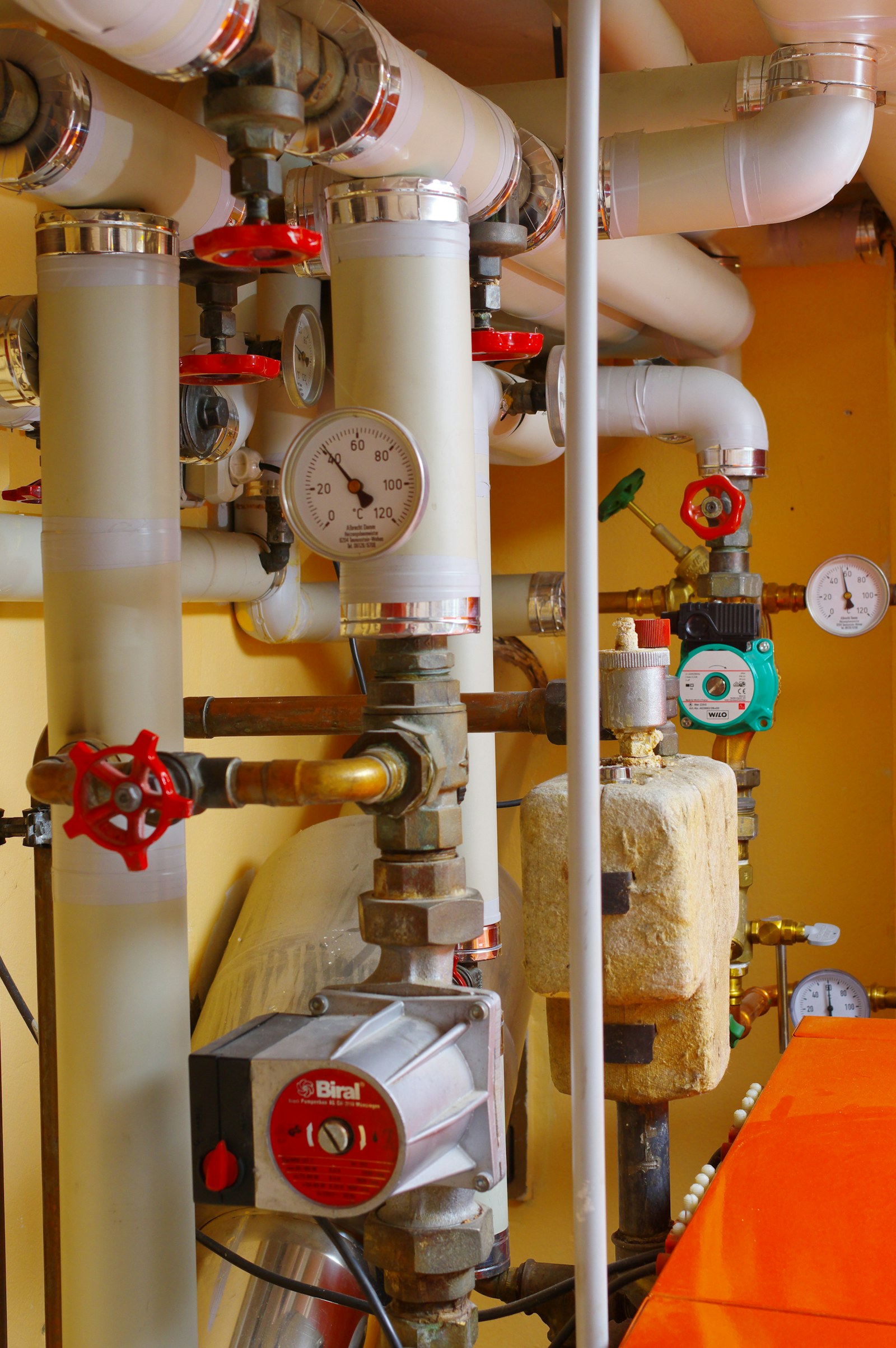
General orientation. Assess the specific project separately. Applies to: Readers comparing an air-side Nordic hall with a liquid-loop design or retrofit.
Reading order
Start with the IT density the plant is drawn for, not with a climate slogan. A hall designed for conventional air is a different machine from a hall designed for rear-door heat exchangers or for direct liquid cooling. Write the indoor device first: air, a door-level exchanger, a cold plate, or another named loop. Then write whether a coolant-distribution unit sits in the hall and who owns the fluid chemistry. Only then walk outside to dry coolers, towers or a heat-recovery exchanger. The indoor loop and the outdoor rejection path are two machines. Conflating them hides the neighbour and the water file.
Keep legal and technical sentences apart. ASHRAE’s Datacom Series page and the 2021 white paper are engineering vocabulary. They are not Boverket decisions and not Naturvårdsverket permits. The European Commission page on data-centre energy performance is a reporting context, including a Union rating scheme under Delegated Regulation (EU) 2024/1364. A reporting rule is not a measured Swedish hall result and not a licence to skip a water investigation.
Then classify heat. A warmer liquid loop can make a district-heat conversation possible. It does not complete it. Stockholm Exergi, Falkenberg Energi and Falu Energi & Vatten appear as named counterparties in operator copy already stored in this register. Prepared valves, a letter of intent, a contract and a dated delivery start remain four states. Do not start with a national winner or with a claim that Nordic free cooling makes liquid unnecessary for every workload.
- Design density before climate copy.
- Indoor device, then CDU and fluid owner, then outdoor rejection.
- ASHRAE class names are vocabulary, not a Swedish statute.
- Heat reuse is a buyer state, not a side-effect of liquid.
What an adoption path actually is
An adoption path is a sequence of dated plant states, not a slogan that “the Nordics went liquid.” Air-side rejection remains a real design. Meta describes outdoor-air cooling and local hydropower at Luleå. That sentence is an operator description of one northern air-side plant. It is not a published connection agreement, not a water-balance sheet, and not proof that the next hall on an adjacent plot can copy the same coil. Hydropower stays in the energy-mix cell.
ASHRAE TC 9.9’s 2021 paper explains why air-only designs are under pressure as IT power rises: more airflow per rack, higher fan power as a share of server power, louder aisles, hotter aisles, and fewer hours where an economizer can hold the previous inlet condition. The paper updates facility-water class names — W17, W27, W32, W40, W45 and W+ — and states a lower temperature limit of 2 °C for those classes as written there. Those names are ASHRAE vocabulary for the water or coolant the facility offers the IT. They are not a Swedish temperature law, and this page will not reprint a class table as “Sweden requires W32.”
A retrofit is a different file from a greenfield liquid hall. Rear-door or hybrid gear can sit in an air hall without a full CDU plant. Direct-to-chip loops add indoor piping, leak detection, fluid quality and a rejection path that neighbours will hear or see. ASHRAE’s Datacom encyclopedia page, which evolved in 2024 from the printed Datacom Series including Liquid Cooling Guidelines, is a subscription engineering reference. It is not a municipal decision. Boverket’s planning guidance still speaks to outdoor plant. Naturvårdsverket’s Environmental Code pages still open if water, noise or another activity is classified.
Heat recovery is a commercial track beside the flange. atNorth SWE01 ties liquid cooling to heat recovery with Stockholm Exergi on an operator page. Occupied IT load and heat actually delivered are not quantified there. GleSYS’s 1 October 2020 Falkenberg notice is a dated heat-delivery start, not a liquid-cooling census. EcoDataCenter’s Falun recovery wording with Falu Energi & Vatten is a third municipal counterparty. Liquid does not mint those contracts. Bidding areas SE1 to SE4 do not choose the fluid.
What named primary sources show
ASHRAE TC 9.9’s public 2021 white paper is the dated engineering colour for why liquid enters a mainstream conversation. It says the paper explains why liquid cooling should be considered rather than how to deploy it, and it records the renamed water classes for the fifth edition of Thermal Guidelines for Data Processing Environments (2021). The Datacom Series landing page states that the TC 9.9 Datacom Encyclopedia evolved in 2024 from the printed series, including content previously in Liquid Cooling Guidelines, and that access is by annual subscription. Those pages do not publish a Swedish adoption rate.
The European Commission’s energy-performance page places data centres in a reporting scheme and cites a global electricity figure of about 1.5 percent, or 415 terawatt-hours, with a projection toward 945 terawatt-hours by 2030 from the IEA’s Energy and AI work as quoted there. It also states an EU aim to triple data-centre capacity by 2035 and describes Delegated Regulation (EU) 2024/1364. Those are Union-level sentences. They are not a Falun water take and not a Kista CDU specification.
atNorth SWE01 remains the clearest Swedish operator sentence in this set that names liquid cooling on a dated site page, together with 6,400 square metres, 12 MW site power, design PUE 1.2 and Exergi recovery wording. Occupied IT load is unpublished. Meta’s Luleå page remains the clearest outdoor-air sentence. evroc’s 3 February 2025 Arlandastad notice designs for up to 16,000 GPUs and does not, in that notice, name a cooling fluid. EcoDataCenter markets Falun for HPC and AI and states a PUE of 1.2 according to ISO standards; the cooling loop itself is not a published national liquid census on the cited site page.
A matrix instead of a national ladder
Draw one page with plant states in rows and evidence in columns. Air-only, hybrid or rear-door, direct liquid, and a named heat-buyer state are different rows. Design drawing, installed kit, measured period and operator marketing are different columns. Empty cells stay empty. A Nordic climate sentence is not a column.
Do not invent a kilowatt-per-rack threshold at which Sweden “must” go liquid. ASHRAE explains pressure on air. It does not publish a Swedish statutory trip point. Operator PUE figures in this register remain operator figures from different years and methods. They are not ranked here.
| Plant state | What a source can show | What this page will not invent |
|---|---|---|
| Outdoor-air / free cooling | An operator description of an air-side plant | A national free-cooling score |
| Hybrid or rear-door | A dated drawing of the door-level device | A silent upgrade of every air hall |
| Direct liquid + CDU | Named loop and rejection path | A Swedish W-class statute |
| Heat recovery attached | Named buyer and evidence state | Delivered MWh from a liquid slogan |
Common misreads
The first misread is to treat a Nordic winter as a permit that air will always win. ASHRAE’s paper is about IT power and facility air, not about Swedish winters as a legal resource. The second is to treat liquid as automatically sold heat, or sold heat as automatically a low PUE. The third is to copy Meta’s Luleå outdoor-air sentence onto every SE1 plot, or atNorth’s SWE01 liquid sentence onto SWE04 Sollefteå.
The fourth is to paste ASHRAE W-class names into a municipal decision. The fifth is to treat the Commission’s 415 TWh or 945 TWh sentences as a Swedish campus water take. The sixth is to build a PUE league table from atNorth’s 1.2, GleSYS’s 1.2, EcoDataCenter’s 1.2 according to ISO standards and Meta’s 1.09. Those remain different operator figures.
What to ask next
Ask for the density the plant is designed for, the indoor device, the CDU owner and the outdoor rejection path, each on a dated drawing. Ask whether water is used, from which source, and which Environmental Code paper has been opened. Ask who hears the dry coolers in July. Ask whether any heat buyer is named and whether the state is prepared, intended, contracted or delivered.
Then open the parent cooling page, the water-and-cooling approvals page, the heat-reuse pages and the high-density page. If the operator will not name the fluid or the rejection neighbour, record the gap. Do not fill it from a climate slogan or from an ASHRAE class name.
- Design density, indoor device, CDU, outdoor path.
- Water source and investigation status, if any.
- Named heat counterpart and evidence state.
- ASHRAE class used as vocabulary, not as a statute.
- No invented rack-kilowatt trip point.
What this does and does not prove
This page proves that a Nordic climate is not a liquid-cooling exemption and not an air-cooling mandate. It proves that ASHRAE TC 9.9 published 2021 guidance that liquid should be strongly considered in some IT-power cases, that Meta described outdoor air in Luleå, and that atNorth described liquid cooling at SWE01.
It does not prove a best Swedish cooling technology. It does not publish a national liquid-adoption rate, a statutory W-class, or a rack-kilowatt threshold. It does not convert operator PUE figures into a league table. It does not treat Exergi wording as delivered heat.
Unknown fluids, unknown rejection neighbours and unknown delivered heat stay unknown. Point to the named source gap. Until a later primary source adds a measured loop or a measured heat year, the diagram is a diagram and the climate is weather rather than a permit.
Sources
- Emergence and Expansion of Liquid Cooling in Mainstream Data Centers — ASHRAE Technical Committee 9.9, 2021-01-01. Checked 2026-09-12.
- ASHRAE data center resources — Datacom Series and TC 9.9 encyclopedia — ASHRAE (publication date not stated). Checked 2026-09-12.
- Energy performance of data centres — European Commission, 2026-01-01. Checked 2026-09-10.
- SWE01 Stockholm metro site — atNorth, 2026-01-01. Checked 2026-09-10.
- Welcome to Facebook Luleå Sweden — Meta Careers, 2013-06-12. Checked 2026-09-10.
- Surplus energy from a new data center is transformed into district heating — GleSYS / Mynewsdesk, 2020-10-01. Checked 2026-09-10.
- GleSYS Falkenberg data center — GleSYS, 2026-01-01. Checked 2026-09-10.
- EcoDataCenter 1, Falun — EcoDataCenter, 2026-01-01. Checked 2026-09-10.
- Conapto opens Stockholm 4 South — Conapto / Mynewsdesk, 2024-09-05. Checked 2026-09-10.
- evroc finalizes land purchase in Arlandastad, Stockholm — evroc, 2025-02-03. Checked 2026-09-10.
- Planning and Building Act guidance — Boverket, 2026-01-01. Checked 2026-09-10.
- Environmental assessment and permits — Naturvårdsverket, 2026-01-01. Checked 2026-09-10.